Mostrando entradas con la etiqueta Form. Mostrar todas las entradas

viernes, 3 de mayo de 2019

Towards the Final Assessment


Let's load a new software into our brains with this unit!
Thinking about the central idea "Energy moves and produces changes in the universe" you will write a non-fiction book as a final assessment activity.

HOW?

Follow these steps:

1. Show the inquirer you are by creating 5-6 questions about the unit. What would you like to know?
Resultado de imagen para lupa
2. Choose one of the following topics to investigate what it is like
  1. Energy (we will cover this broad topic in class)
  2. Big Bang Theory & other theories.
  3. Planets and new planets.
  4. Galaxies and constellations.
  5. Satellites: Natural and artificial.
  6. Earth movement: rotation (make connections to time & how we live).
  7. Earth movement: revolution (make connections to time & how we live)
  8. Stars (& the sun)
  9. Eclipses (solar & lunar)
  10. Phases of the Moon (related concepts).
  11. Meteors, meteoroids,  and meteorites (comets & asteroids).

3. Brainstorm about the topic you chose and decide the specific aspects you will investigate. What is my topic about? How much do we want to find out? How are we going to do it?
Design an investigation plan.
Resultado de imagen para brainstorming

4. Develop and answer your questions by using at least 3 sources of information. Remember to write the name of the source each time. Mention at least 3 aspects: What is your topic like? (FORM), Why is it like this? (CAUSATION), How does it change? (CHANGE)

Resultado de imagen para dictionary drawing

4. Create a vocabulary list related to your topic (mini dictionary)
Resultado de imagen para dictionary drawing

5. Create your book. Make sure to include illustrations and all its parts:
- Cover
- Table of Contents
- Introduction
- What is my topic like?
- Why is my topic like this?
- How does it change?
- Conclusion
- Back cover

lunes, 22 de abril de 2019

To infinity and beyond!


Transdiciplinary theme:
Resultado de imagen para how the world works pyp


CENTRAL IDEA:
Energy moves and produces changes in the universe.
LINES OF INQUIRY:

Different types of energy (FORM)
Energy is in constant transformation (CHANGE)
Elements in space move and have an effect on Earth.(CAUSATION)

Imagen relacionada

Resultado de imagen para form PYP

Resultado de imagen para CAUSATION PYP
Imagen relacionada


miércoles, 13 de marzo de 2019

Collecting and interpreting data through tally charts and graphs

What is a tally chart?


image.pngTally charts are used to collect data quickly. Filling in a chart with marks representing numbers is faster than writing out words or figures and the data is collected into sub-groups immediately, making it easy to analyse. Tally charts are used to construct bar charts or pictograms. Watch the following videos to understand better how this works.


There are some essential parts each graph must have. Don't forget to include them! Information will change according to the topic you are working with. For example, if your graph is about how many people like a specific type of music you will write the music styles instead of colours. 


image.png

There are many different types of charts and graphs. Some of the most common ones are line graphs, bar graphs and pie charts. 

Line graphs show you how numbers have changed over time. They are used when you have data that are connected. They help you to show trends. For instance, average night time temperature in each month of the year.

Bar graphs are used to show numbers that are independent from each other. For example, data may include things like the number of children who like to play basketball, football or table tennis.  

Pie charts show you how a whole is divided into different parts. 


image.png


Macronutrients and Micronutrients

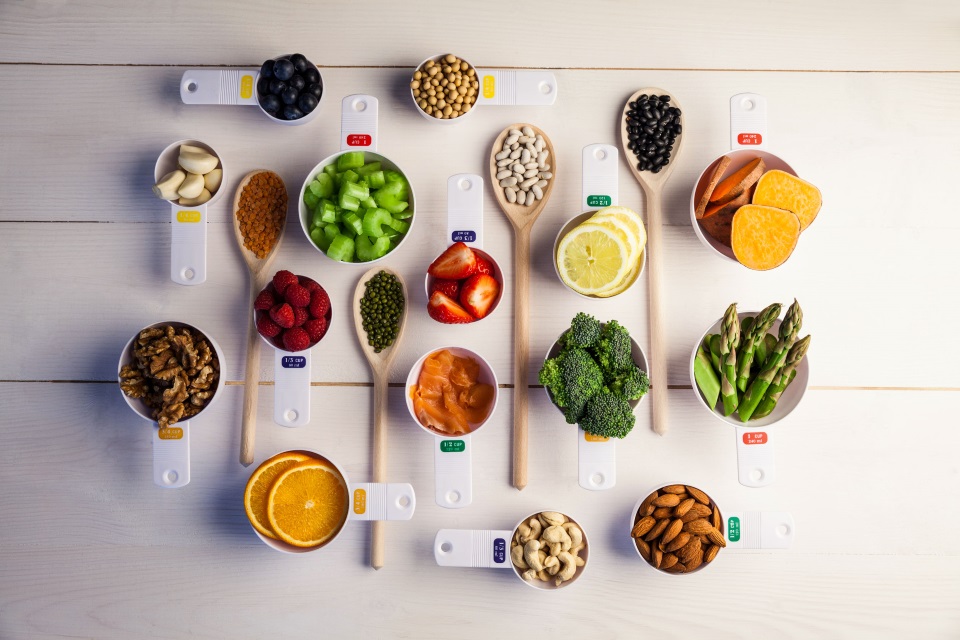
What can we find in the food we eat? Take a look at the following webpages to find out more. Macronutrients: proteins, carbs, fats. ...