lunes, 10 de junio de 2019

Light and Shadow applied to Art


Light and Shadow are topics we can study and apply in a transdiciplinar way. We are going to talk about them from Art's point of view. Before we do it, let's clarify some ideas :) 


Light. The Dr. Binocs Show.


Shadow. The Dr. Binocs Show.


Let's test your knowledge about the topic! Visit the following website to consolidate what you learnt. 


DRAWING LIGHT AND SHADOWS

Light and shadows visually define objects. Before you can draw the light and shadows you see, you need to train your eyes to see like an artist.

You know the objects around you are 3D because you can walk up to them, see them from all sides, and touch them. Take a moment to look around you at familiar objects. Try to discover why you see their actual 3D forms. Look for the different values created by the light and shadows (Values are the different shades of gray between white and black).

Before you can draw the appropriate values that illustrate light and shadows correctly, you need to be able to visually identify the following:

  • Center light: The place in which a dominant light hits the object. The placement of the light source affects every aspect of a drawing.
  • Shadows: The areas on an object that receive little or no light.
  • Cast shadow: The dark area on an adjacent surface where the light is blocked by the solid object.

Here there are some main shading techniques. 
You should try them at home!
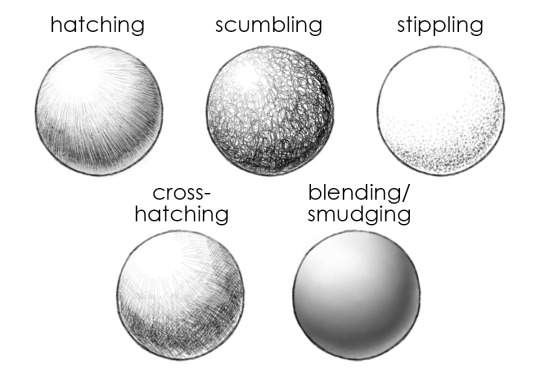

Resultado de imagen para shading techniques

Sources: Citing sources like a Pro

Hi kids! Out PYP program allows us to have the chance of inquiring about different topics. We usually use books, magazines, youtube videos, images from google or online websites to collect information. However, it's important to learn about how to include this information in our work without getting into trouble. Watch these videos to know more :) 


Resultado de imagen para quoting sources for kids


jueves, 16 de mayo de 2019

NASA Internation Space Station (ISS)

NASA International Space Station (ISS)


Did you know about the NASA International Space Station? Did you know it is orbiting our planet Earth? Do you think many things are happening there? Take a look at the 24-Hour-Live-Streaming straight from the Ionosphere!

Experimenting with Light and Sound

Light and Sound


During our Unit "To Infinity and Beyond (How The World Works)" we are inquiring about different types of energy, but in particular "light" and "sound". Would you like to know more about them? What they are like? How they work? How they change?  Take a look at the following videos showing simple science activities you can do at home!

Newton's Prism (Separating light into colours?)
Newton's Disc (All colours into white?)
Refraction of light
Reflection of Light
Opaque, transluscent and transparent Objects
Seeing sound energy?

viernes, 3 de mayo de 2019

Towards the Final Assessment


Let's load a new software into our brains with this unit!
Thinking about the central idea "Energy moves and produces changes in the universe" you will write a non-fiction book as a final assessment activity.

HOW?

Follow these steps:

1. Show the inquirer you are by creating 5-6 questions about the unit. What would you like to know?
Resultado de imagen para lupa
2. Choose one of the following topics to investigate what it is like
  1. Energy (we will cover this broad topic in class)
  2. Big Bang Theory & other theories.
  3. Planets and new planets.
  4. Galaxies and constellations.
  5. Satellites: Natural and artificial.
  6. Earth movement: rotation (make connections to time & how we live).
  7. Earth movement: revolution (make connections to time & how we live)
  8. Stars (& the sun)
  9. Eclipses (solar & lunar)
  10. Phases of the Moon (related concepts).
  11. Meteors, meteoroids,  and meteorites (comets & asteroids).

3. Brainstorm about the topic you chose and decide the specific aspects you will investigate. What is my topic about? How much do we want to find out? How are we going to do it?
Design an investigation plan.
Resultado de imagen para brainstorming

4. Develop and answer your questions by using at least 3 sources of information. Remember to write the name of the source each time. Mention at least 3 aspects: What is your topic like? (FORM), Why is it like this? (CAUSATION), How does it change? (CHANGE)

Resultado de imagen para dictionary drawing

4. Create a vocabulary list related to your topic (mini dictionary)
Resultado de imagen para dictionary drawing

5. Create your book. Make sure to include illustrations and all its parts:
- Cover
- Table of Contents
- Introduction
- What is my topic like?
- Why is my topic like this?
- How does it change?
- Conclusion
- Back cover

Macronutrients and Micronutrients

What can we find in the food we eat? Take a look at the following webpages to find out more. Macronutrients: proteins, carbs, fats. ...